Nvidia lost Jensen Huang for 11 days. What the timeline shows founders about key-person risk
From a congressional letter on Nov 4 to his reinstatement on Nov 23: the dated timeline of Jensen Huang's exit from Nvidia, and what it teaches founders.
Jensen Huang co-founded Nvidia and ran it for 33 years. This month he resigned, and 11 days later the board voted him back in. The headlines covered the start and the end. The steps in between show how much of a company can rest on one person, and who actually decides when that person goes.
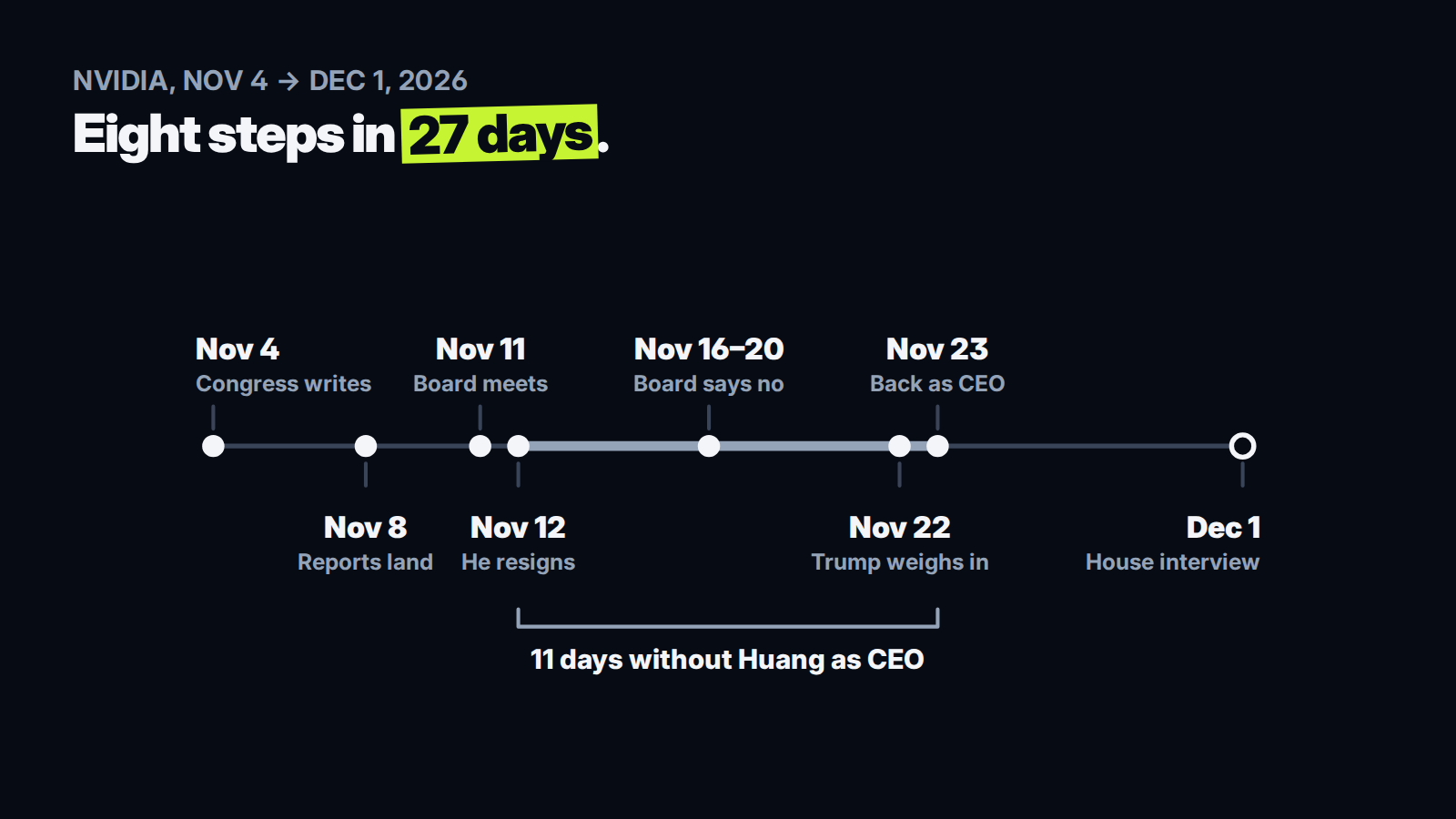
Most people saw two headlines: Huang resigns, Huang returns. What happened between them is a more useful story for founders, because almost every step was a decision someone had to make: lawmakers, reporters, the board, the CEO himself. Here is the month in order, based on Nvidia's own filings and the reporting around them.
The timeline
Nov 4: Congress writes to Nvidia
Three House committees sent Huang a letter asking about Nvidia's security protocols against espionage, CBS News reported. It was the first public sign of trouble, and it was about security, not about Huang personally.
Nov 8: The reports land, and Huang apologizes
The New York Times and the Financial Times reported on a memo saying US intelligence showed Huang had a relationship with a business executive who was an asset of China's spy service, according to NBC News and Al Jazeera. In a memo to employees, Huang admitted to being unfaithful to his wife and apologized. The board backed him and opened an independent investigation.
Nov 11: A second report, and the board meets
The New York Times, citing five people who had worked at Nvidia, reported a relationship with an executive who reported to Huang. The board met that night.
Nov 12: Huang resigns
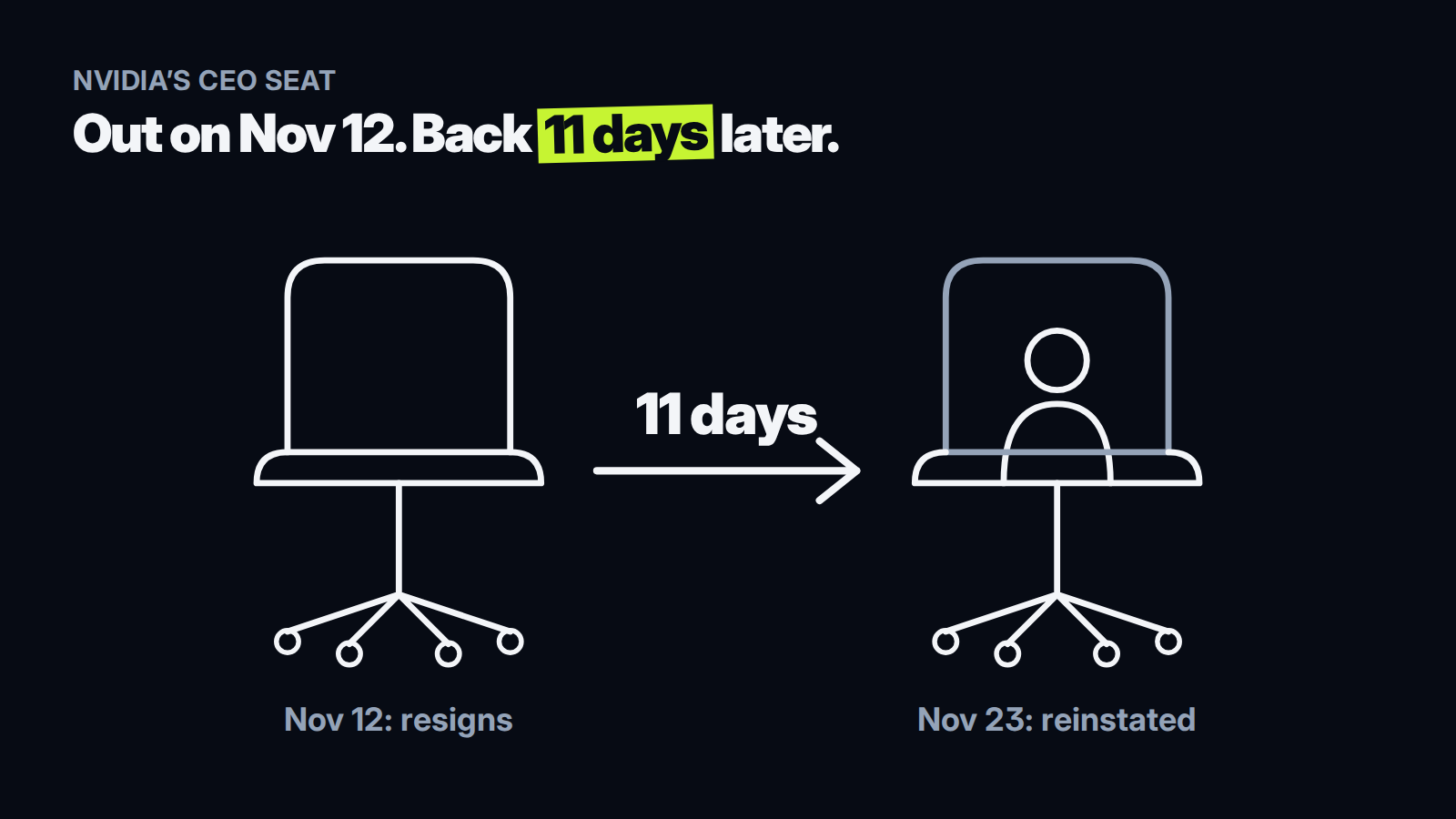
Nvidia's filing with the SEC said Huang had resigned as president, CEO and director, ending a 33-year tenure. CFO Colette Kress became interim CEO, and Harvey Jones became board chair. The same day, a second House letter warned of a subpoena.
Nvidia's stock fell as much as 16% during the day he resigned and closed down 4.3%.
Nov 16–20: The board says he isn't coming back
On the earnings call that week, board chair Harvey Jones said the company did not intend to reinstate Huang as CEO, CBS News reported. Huang, under threat of subpoena, agreed to answer questions from the House and the Senate.
Nov 22: Trump weighs in
Huang said that week that he would be honored to return as CEO, according to CBS. On Monday, Nov 23, President Trump told CNBC that he had spoken to the board and convinced it, and that it had been easier to convince on Sunday, Nov 22.
Nov 23: The board votes him back
Nvidia's Nov 23 filing said the board voted unanimously to reinstate Huang, and stated that he poses no national security risk. Nvidia's stock opened about 30% higher that day (CBS reported nearly 30%, MS NOW more than 30%).
Dec 1: Huang faces Congress
Huang is scheduled for a closed-door, transcribed interview with three House committees. Nvidia's Nov 23 filing says the investigation will proceed to its conclusion. The story isn't over.
What the stock did
We aren't saying why the stock moved; markets react to many things at once. But the two biggest moves of the month fell on the two days the CEO seat changed hands.
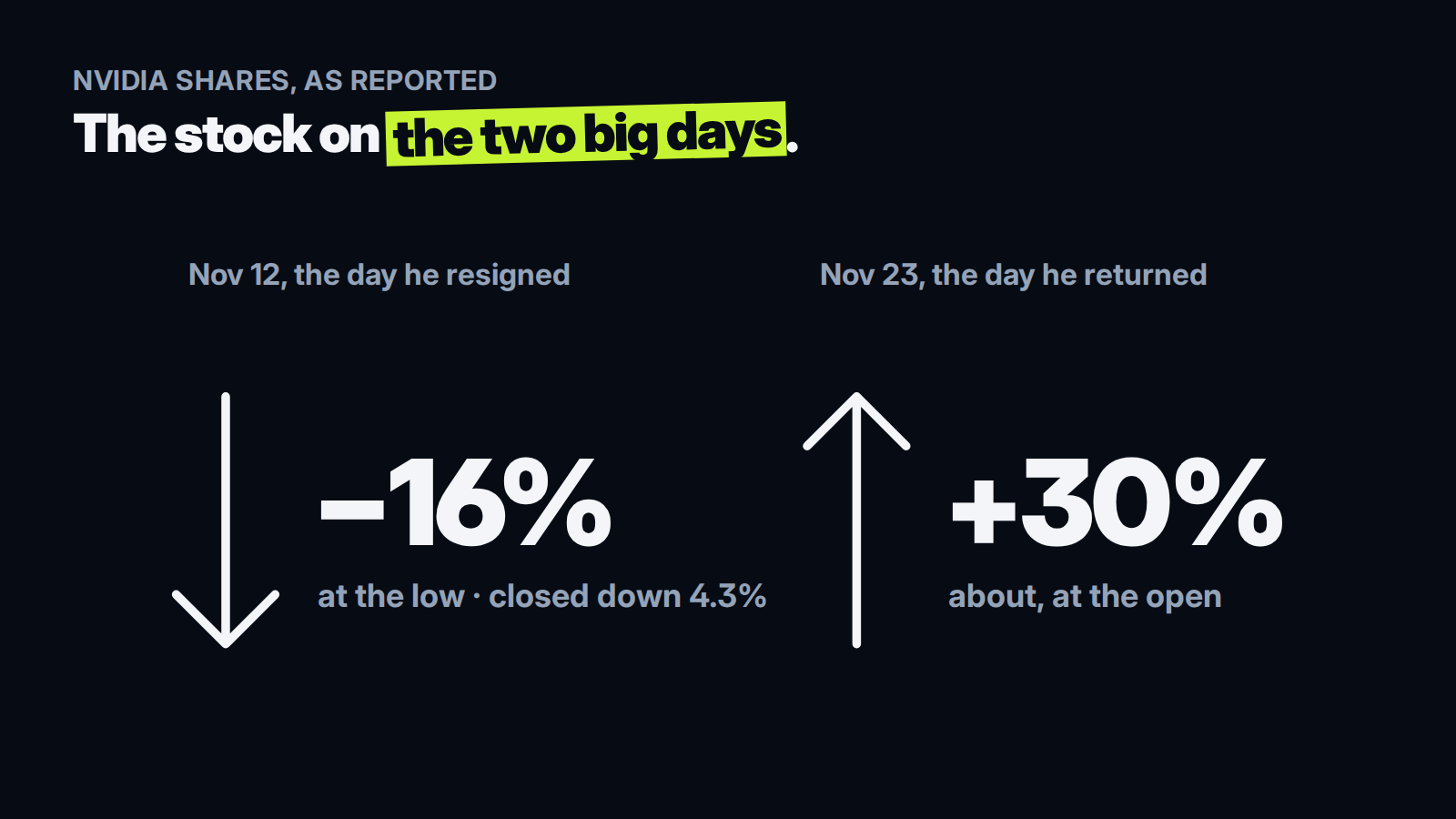
Investors have a name for this: key-person risk, the chance that a company's value depends on one person staying in the job. Nvidia is one of the most valuable companies in the world, with thousands of senior people, and the market still moved hardest on the days its founder left and came back.
Who decided
Look at the timeline again and count the decisions. Congress wrote the letters. Reporters published the stories. Huang wrote the apology and, according to the filing, resigned. But the decisions about who runs Nvidia were made in one room:
- On Nov 8, the board backed him and opened an investigation.
- On Nov 12, the board accepted his resignation, named an interim CEO and put a new chair in place.
- That week, the board chair said he wasn't coming back.
- On Nov 23, the board voted unanimously to bring him back.
Founders often think of the board as the people they report to once a quarter. In most companies, it's the board that appoints the CEO and can remove one, including a CEO who founded the company. Huang co-founded Nvidia, and for 11 days he wasn't running it.
The board also has limits. It couldn't stop the congressional letters, the reporting or the stock from moving. What it controlled was the plan: who ran the company in the meantime, who spoke for it, and what the vote would be.
What this means for your startup
You don't need a crisis on the scale of Nvidia's to face the same questions. A health problem, a family emergency or a dispute with a co-founder can take a CEO out of the job for a week. Investors know this, which is why key-person risk comes up in due diligence. Three questions are worth answering before anyone asks:
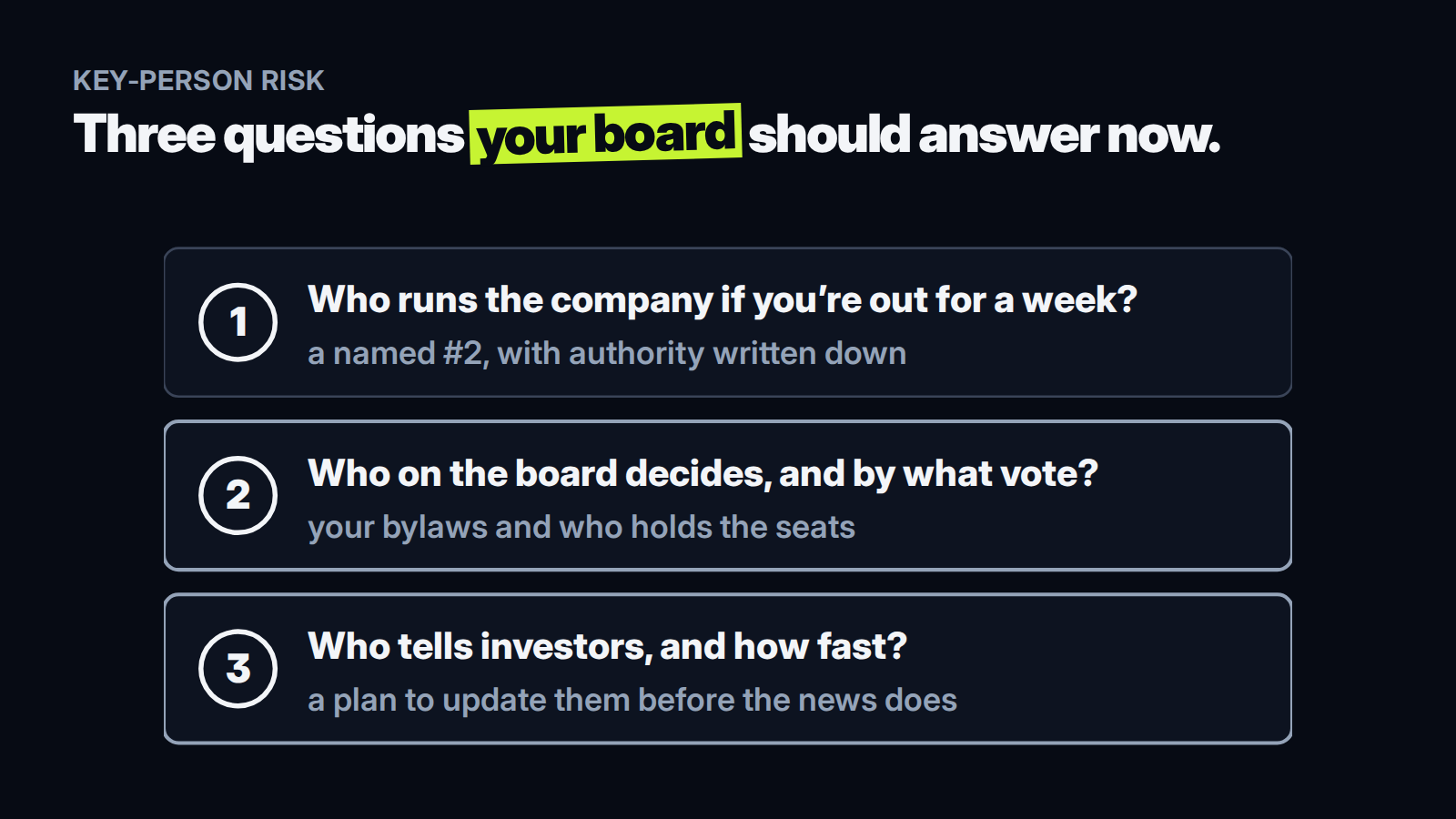
1. Who runs the company if you're out for a week?
Nvidia had an answer on day one: its CFO stepped in as interim CEO. Name your number two, and write down what they can sign and decide without you. If the answer today is "nobody," that's the first thing to fix.
2. Who on the board decides, and by what vote?
Know your bylaws and who holds the board seats before you need them. At an early-stage company, a board of three can change hands with one new investor. Founders who understand the votes are rarely surprised by them.
3. Who tells investors, and how fast?
Investors judge how a team handles bad news as much as the news itself. Decide now who writes the update, and send it before investors read about it somewhere else.
A quick checklist
- Someone other than you can run the company for a week, and it's in writing.
- You know who sits on your board, what they can vote on, and what it takes to replace the CEO.
- Your investors hear bad news from you first.
- Your pitch shows a team, not just a founder.
See your startup the way investors do
Key-person risk is one of the first things an investor tests. TokenRoster gives you an investor-style assessment of your startup, so you see where the questions will come from before you're in the room. Get assessed
Sources
- CBS News, Nov 17, 2026. The Nov 4 and Nov 12 letters, the subpoena warning, the Dec 1 interview.
- NBC News, Nov 12, 2026 and Al Jazeera, Nov 12, 2026. The Nov 8 and Nov 11 reports, the board meeting, the intraday drop and the close.
- Nvidia, Form 8-K, Nov 12, 2026: the resignation, the interim CEO and the board chair.
- CBS News, Nov 23, 2026 and MS NOW, Nov 23, 2026. The earnings-call statement, Huang's comments and the move at the open.
- CBS News, Nov 23, 2026 and CNBC, Nov 23, 2026: Trump's comments.
- Nvidia, Form 8-K, Nov 23, 2026: the unanimous vote, the national-security statement and the investigation.
- Dates: the earnings call is dated "last week" in the Nov 23 reporting, so this post gives the week (Nov 16–20).